



By Sonny Oboson | Tech Editor, Africa –
The digital divide is the gap between those with and without access to modern technology. It affects different demographics and regions. This technology can include the telephone, television, personal computers, and the internet. Before the late 20th century, “digital divide” meant those with and without phones. After the late 1990s, it mainly described the gap between broadband users and non-users. The digital divide usually exists between city and rural dwellers, the educated and the uneducated, and different socioeconomic groups. Globally, it exists between developed and less-developed nations. Even with some access to technology, a digital divide can exist. It shows in low-performance computers, slow wireless, cheap dial-up, and limited access to paid content. A separate access marketplace is problematic. It is due to the rise in video-on-demand, video conferencing, and virtual classrooms. These services require high-speed, high-quality connections. Those on the less-served side of the digital divide cannot access or afford them. Smartphone adoption is growing, even among low-income and minority groups. But high data plan costs and hard-to-use apps hinder progress in closing the gap.

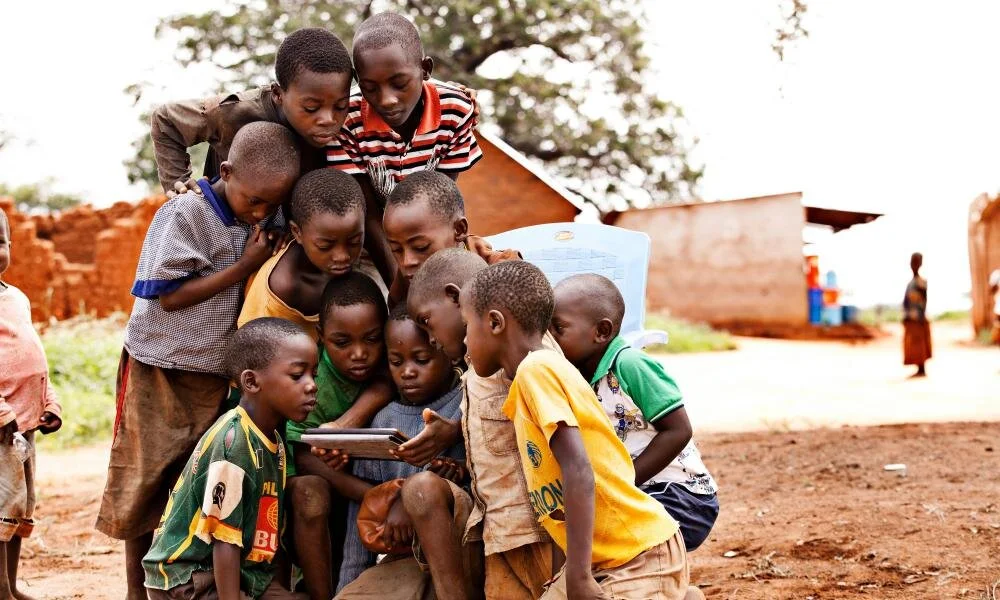
Business Call to Action, Source – Gadgets are penetrating into rural African areas with Internet
Recent studies show the digital divide still exists today. A June 2013 U.S. White House report found that only 71% of American homes had broadband access. This is lower than in other countries with a similar GDP. Closing the digital divide would boost literacy, democracy, and equality. Supporters say it would also promote social mobility and growth. The difference is not just about Internet access. It’s about access to ICT and media for different groups. The Internet has two aspects: access and quality of service. The most discussed issue today is access. It must be affordable and of good quality. The problem is a frequent topic of international discussion. Some countries have more resources than developing ones. They are exploiting the Internet, which is expanding rapidly. Here is the latest Akamai State of the Internet Report. It shows average and greatest connection speeds, Internet penetration, and broadband adoption. It also covers mobile usage and trends in this data over time. The digital divide is not, in fact, a single, clear gap that divides a society into two groups.
Researchers report that disadvantages can include:
- lower-performance computers
- low-quality or high-priced connections (i.e., narrowband or dial-up)
- difficulty in getting technical support
- less access to subscription-based content
Advertisement

A BOOK THAT CHALLENGES SILENCE. IGNITES CHANGE. SAVES LIVES.
ACRY FOR LOVE, MINDSET, AND AGAINST RAPE & ABUSE by Okoro Ukata
What if the way we think about love could end cycles of abuse?
What if awareness could become protection… healing… power?This groundbreaking book dares to confront one of society’s darkest realities—rape and abuse—and replaces fear with a transformative mindset rooted in love, awareness, and action.
– Abuse thrives in silence.
– This book breaks it.
Bridging the Gap
The idea that some tech is vital to civic life is not new. Some argue that the Internet and other ICTs are transforming society. They say these tools improve understanding and cut power imbalances. They will create a viable democratic world.
In many countries, access to the telephone is vital. So, governments implement policies to provide affordable phone service. Unfortunately, some countries lack enough telephone lines.
Literacy is arguably one of the most essential elements. It is not related to any new technologies or devices. Many believe literacy is key to work, self-learning, and politics. It’s also vital to use the Internet.
Many argue that closing the digital divide is important. The major arguments are:
1. Economic equality
Some believe internet access is vital for civil life. Some developed countries aim to guarantee it for their citizens. The telephone is often considered important for security reasons. If the person in trouble has access to a phone, they might handle emergencies, such as health or crime-related issues, more effectively. Another important fact is that much vital information is now on the Internet. It affects careers, civic life, and safety. At times, organizations administer and provide social welfare services electronically.
2. Social mobility
Some believe that computers and networks are vital to their learning and careers. So, education should teach computing and Internet use. The lack of such offerings harms low-income children due to the digital divide. To provide equal opportunities, governments might offer some form of support.
3. Democracy
Some think that the use of the Internet would lead to a healthier democracy in one way or another. A key goal is to boost public participation in elections and decision-making.
4. Economic growth

Hynd-Bouhia-Africa-Digital-Divide-FEATURED – Impact Entrepreneur, Source
Some believe that a better information infrastructure would boost growth in developing nations. In general, people associate information technologies with productivity improvements. Using the latest technologies may give some countries’ industries a competitive edge.
One scholar suggests that social media, like Facebook and Twitter, may help. They could close the divide. He believes a good, decentralized solution must let local, developing communities create their own content.
As Amir Hatem Ali says, the popularity and generative nature of social media empower individuals to combat some of the main obstacles to bridging the digital divide. Facebook’s statistics reinforce this claim. Facebook says over 75% of its users live outside the US.
Moreover, the website presents more than seventy languages. The high number of international users is mainly due to Facebook and other social media. Its strengths are that it allows user interaction, has a user-friendly design, and provides free access to most sites. The problem with social media is that it requires physical access to be accessible. Also, social media can help people. It can bridge the global digital divide.
Across the world, some cities have begun programs to close the digital divide. They aim to help residents, schoolchildren, and the elderly. One such program, founded in 1996, was the Boston Digital Bridge Foundation. The city of Boston sponsored it. It focuses on school children and their parents. It helps ensure they have the same level of knowledge about computers, apps, and the Internet.
Currently, Rwanda is using satellite technology to connect its rural schools and is building fiber-optic networks. Malawi is not left out, as it uses specialized satellite systems to reach the country’s interior. Kenya, Nigeria, and South Africa are building local data centers to store their data locally. Morocco has 90% Internet connectivity across their entire country.
Research ICT Africa said that 20% of Internet access is essential for economic growth in Africa and for conducting green, AI-enabled research. Their work yields data on how AI can bridge the digital divide and stimulate growth and development in Africa.

Sonny Oboson is the man behind the brand MRWEBBS Online, a dynamic IT professional. He has a degree in Business Management from the University of Port Harcourt, Nigeria. He is also a Microsoft Certified Systems Engineer, certified by NIIT Nigeria. He has an Advanced Diploma in Systems/Network Engineering and an international certification, MCITP. He is the CEO of Sonnywebs International, based in Nigeria, with an NY office. Email him at mrwebbs2@gmail.com. He was one of the contributors who supported Heartmenders Magazine at its 2014 founding.