


By Chukwudi Ikeri Arzika | Contributing Editor
NIGERIA–From what I gathered about the trans-Atlantic slave trade, the voyage on a slave ship was so traumatic that slaves were expected to endure the torturous experience with stoicism. That was during the dark era of human civilization, a time when the boundaries of human rights were largely defined by the interests of the powerful. Africans were forcibly taken to the hemisphere to till its land, mold bricks, and provide the labor that built the great cities we have today, and also to spin the wheels that ran the factories that engendered the industrial revolution.
The slave trade was such an evil that more than a century later, it continues to haunt the conscience of mankind. Many in Africa today attribute the underdevelopment here to it and put the blame for that trade solely on the capitalist West for its unconscionable greed. However, an objective view on repugnant trade in human commodities of the old can be likened to this current Mediterranean migrant crisis, considering the gruesomeness.
Today, in the 21st century, Africans have begun a revival of that old evil in a modern way. Each year, thousands of Africans attempt to reach the shores of Europe, apparently with the illusion that a good life awaits them there. The ‘raison d’être’ many of them are leaving is to be able to escape from a shade of troubles that dot many of the countries on the continent. But after they manage to reach Europe, the conditions awaiting the migrants do not offer a contrast to life at home and, in the first place, call into question their judgment for embarking on such a risk-filled journey.
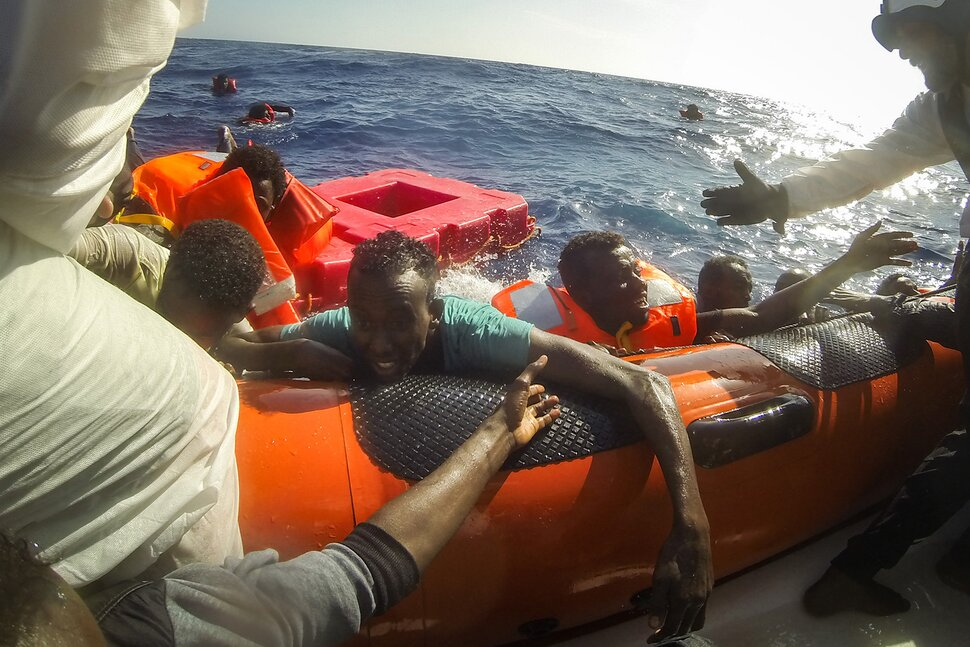
Crammed like sardines in makeshift vessels that are hardly seaworthy, the voyage is scarcely worthy of the risk; a tumultuous voyage that often ends in capsizing and death. At one time, according to the United Nations High Commission for Refugees, over the last two years, the percentage of refugees who die making the crossing has more than doubled from around 2% to 5% of the rapidly growing number of refugees. About 60,000 made the crossing in 2013, increasing to at least 219,000 last year. Some estimates put the number in 2014 at as many as half a million. The death toll recorded that year from boat mishaps had climbed above 12,000, yet more African migrants continue to make the illicit trip crammed in rafts down the Mediterranean.
The ones that managed to reach Europe after the grotesque journey, having survived the hunger and thirst in the Sahara and the drowning from a shipwreck in the sea, face a grim reality. They are never regarded as migrants, but as refugees, and as refugees, they are condemned to living in refugee camps until they have a permit to take up a ‘job’. Just what manner of job these Africans are offered reminds one of the “she will make a good cleaner, not a minister” jibe of one Italian MP when, in 2013, Cecile Kyenge was appointed the first black minister in the country.
The Mediterranean voyage to Europe is very similar to the trans-Atlantic slave trade and does not paint a good picture of Africa today. A continent that has all the most important modern-day resources that support AI module production. As more and more deaths are recorded on the southern shores of Europe, there appears to be a sharp increase in the numbers attempting the perilous crossing, with the result that more people than ever are dying. Unfortunately, while the EU tries to find a way to curb it, the AU has scarcely featured it in its agenda. It can be understood why the AU leaders are silent and unable to perceive the embarrassment this humanitarian crisis brings and the burden it creates for countries like Greece and Italy that have grappled with economic crisis: poor governance, pervasive corruption, and repression in most countries of Africa have caused many to lose hope and try to escape into slavery in Europe.
The solution to the crisis rests on the EU taking concrete and sincere action. The view that targeting the gangs that operate the trade and seizing their boat while they are still in port is a solution is a judgment that looks to be wrong because it didn’t seem to recognize the complicity of the migrant – they are the reason the traffickers are in business. But by letting the migrants know that a military patrol of the Mediterranean will intercept any boat carrying them, destroy the boat, and send them back, only then can they realize the futility of the voyage.
So the solution ultimately lies with the EU taking some multi-dimensional approach: starting with a patrol of the Mediterranean to intercept migrant laden boats, and collaborating with the security forces in North Africa to disrupt the trade including an investment in media enlightenment of people in societies like Nigeria, Ghana, Senegal and Eritrea where most of the migrants come from with one objective – dampen the morale of a prospective migrant to attempt to make a trip that will end in being sent back and the ultimate loss of the money paid for the trip, if not paying the ultimate price on the high seas in overburdened boats capsizing. If the EU fails to do this, it will sooner or later realize that it will continue to waste resources on curbing, whereas fostering a conducive Africa and true enlightenment will reduce the number of Africans trying to enter their countries in these harrowing ways.
Above all, today, some African countries are taking a position that enables their citizens to participate in the local economy centered on their natural resources. African youths must educate themselves on how to make use of the local opportunities they often abandon, while other foreigners invade, harness them, become millionaires overnight, and repatriate that wealth back to their foreign countries.

Chris McGrath|Getty Images
Refugees and migrants are pulled onboard a rescue craft after a wooden boat bound for Italy carrying more than 500 people capsized in May 2017 off Lampedusa, Italy. PHOTO CREDIT: U.S. News & World Report L.P.
This article was edited by the Editorial Team of Heartmenders Magazine Media Inc., New York. and previously published on Heartmenders Magazine website, and has been updated and republished with an enhanced new title.

Ikeri Chukwudi Arzika writes from Port Harcourt, Nigeria. He is the Editor-in-Chief of The Child Today and Ameresh magazines. Ikeri Chukwudi Arzika contributed this article to Heartmenders Magazine. Contact him at chuzik2000@yahoo.com