



By Okechukwu Okugo, Founding Editor, Heartmenders Magazine, USA
When a baby is born, they start attracting gifts. Even right away, people squeeze money into their tiny hands. The mother collects this money as a way to show gratitude. The baby escalates this gift when they start growing teeth. The first tooth is unique. When someone notices it and mentions it, they owe the child a meaningful gift. This gift is often something alive, like a bird or a goat. The moment the tooth pops out, the parent will encourage the baby to laugh or smile. This way, others will notice the new tooth and get excited.
The baby is not named right away; it takes between 7 and 12 days. Sometimes, uncles, aunts, and grandparents suggest different names. However, the name that matters most is the one the father or mother chooses. The new mother may ask her mom, mother-in-law, or another trusted female relative to help with the baby’s infant care. This traditional arrangement is called ọmụgwọ. This lasts 6 to 8 months, or even longer. This cultural practice helps the mother and baby receive good care. It also teaches the young mother how to care for her newborn. When the elderly relative returns home, it’s a great time to buy her gifts to show appreciation.
The Igbo have a custom, like Latinos, of burying the placenta. They bury a baby’s placenta at the base of an economic tree, such as a palm, orange, or mango tree. The child then owns that tree.
So, in this land, when a child is born, a wave of joyful traditions starts. These activities bring joy to many people and the whole community. This strengthens as the child grows into a positive force for the community. The community hopes the child will grow, join local events, and help the town progress.
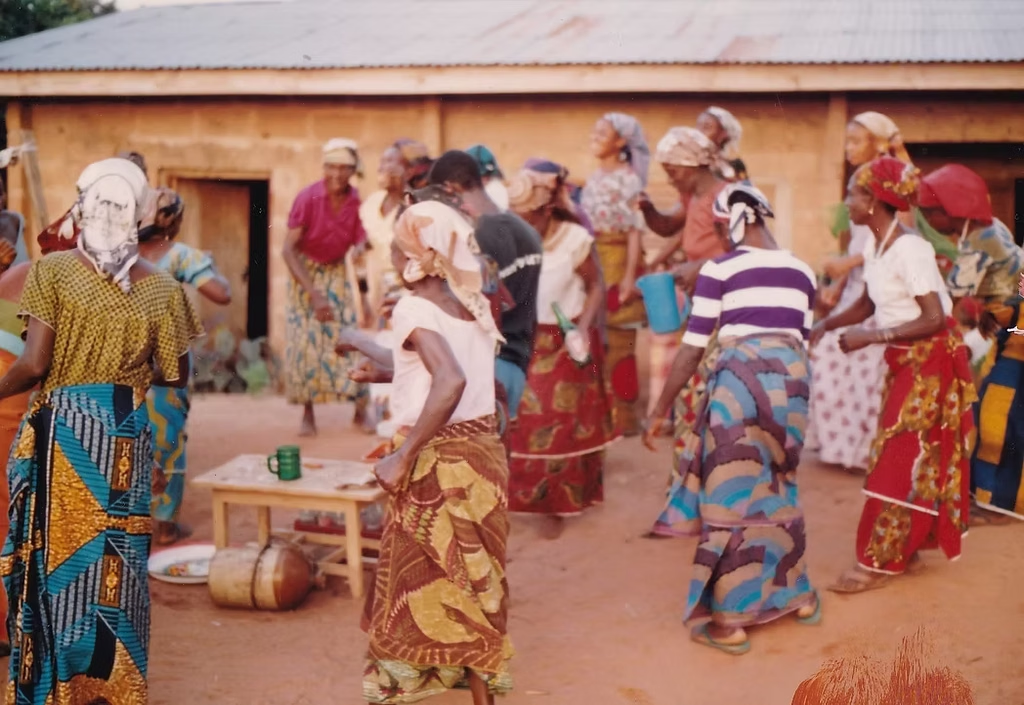
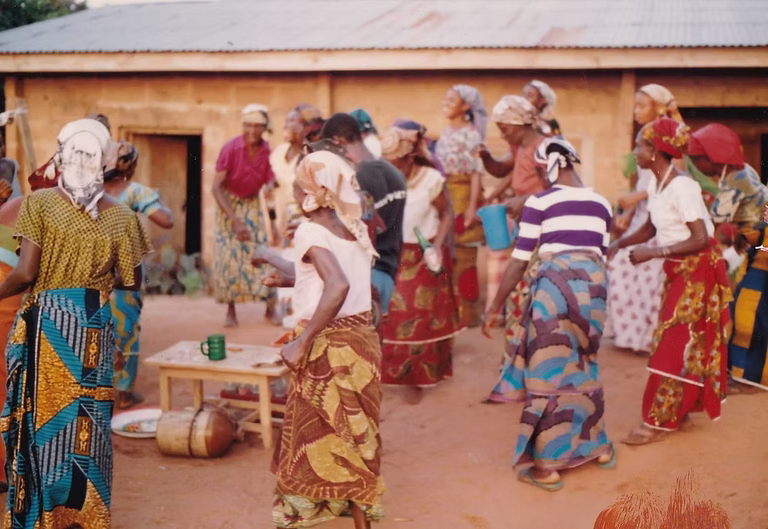
Ụma nwa: Women dancing to celebrate the birth of a newborn baby. This can happen in the public square or market, or at the new parent’s home. Photo source: https://nnambe0.wixsite.com/the-way-we-were/celebration
Many older adults see the child as their own. They also feel responsible for correcting the child when they notice a mistake. Every child belongs to the community as a longstanding practice. This gave rise to specific parlance like “Nwa bụ nwa ọha,” meaning the community owns the child. This isn’t about words. It was about practice. Communities have united to provide both local and international scholarship for a bright child. This child excels in exams but comes from a low-income family. The parents need help to pay for their education. Then the community can step in to train this brilliant, growing child. They train the child together, like a village. The community hopes the child they train will become their best self and finally give back to the community. They carry the weight of “student loans” communally, differently than in the US, where the government bears the brunt. But here, the child will not pay back the money with interest in installments over 30 years. Instead, the grown adult is expected to help develop or advance their community by bringing industrial or educational development to the entire town. They will support the entire community after receiving help from it. Thus, the child not only receives discipline from the community, but also nurturing and training. Modern life has changed how people view discipline. Parents often disapprove of others spanking or punishing their kids. This is true no matter how the child acts. Thus, cultural abandonment breaks this community connection.
The United States has what’s called a baby shower. How is a newborn traditionally welcomed in your area?
Note: This post has been updated from the original submission published a few years ago on the Heartmenders Online Platform.
Okechukwu Okugo is the founding editor of Heartmenders Magazine Media Inc. He is a serial entrepreneur and the author of many books. Contact him via email at heartmendersmagazine@yahoo.com.