



By Chandrapal Singh, Heartmenders Magazine Contributor, Asia –
Here’s an overview of manufacturing in India:
Key Industries
1. Automotive: India is a significant player in the global automotive industry, with major companies like Tata Motors, Mahindra & Mahindra, and Maruti Suzuki.
2. Pharmaceuticals: India is a leading producer of pharmaceuticals, with companies like Sun Pharma, Cipla, and Dr. Reddy’s Laboratories.
3. Textiles: India has a long history of textile production, with major centers in Maharashtra, Gujarat, and Tamil Nadu.
4. Electronics: India is emerging as a significant player in electronics manufacturing, with companies like Foxconn, Samsung, and Intel setting up facilities.
5. Aerospace: India has a growing aerospace industry, with companies like Hindustan Aeronautics Limited (HAL) and Bharat Electronics Limited (BEL).
Initiatives and Policies

Rise of AI-ready factories – India’s manufacturing sector finds its edge. Photo credit: ET Edge Insights
1. Made in India: Launched in 2014, this initiative aims to promote India as a manufacturing hub and attract foreign investment.
2. National Manufacturing Policy: Introduced in 2011, this policy aims to increase manufacturing’s share of GDP to 25% by 2025.
3. Goods and Services Tax (GST): Implemented in 2017, GST has simplified the tax regime and improved the business environment.
4. Investment incentives: The government offers various incentives, such as tax breaks, subsidies, and investment promotion schemes.
Challenges and Opportunities
1. Infrastructure: India’s manufacturing sector faces challenges related to infrastructure, including inadequate transportation networks and power supply.
2. Skilled workforce: India needs to develop a more skilled workforce to support its manufacturing ambitions.
3. Competition: India faces competition from other emerging manufacturing hubs, such as Vietnam and Indonesia.
4. Opportunities in emerging technologies: India has opportunities to leverage emerging technologies like AI, robotics, and IoT to drive manufacturing growth.
ad

Future Outlook
1. Growth prospects: India’s manufacturing sector is expected to grow at a CAGR of 7-8% over the next five years.
2. Increasing foreign investment: India is likely to attract more foreign investment in manufacturing, driven by initiatives like Make in India.
3. Focus on high-tech manufacturing: India is expected to focus on high-tech manufacturing, including aerospace, defense, and electronics.
Overall, India’s manufacturing sector has significant growth potential, driven by government initiatives, infrastructure development, and increasing foreign investment.
Key Industries
1. Automotive
2. Pharmaceuticals
3. Textiles
4. Electronics
5. Aerospace
Initiatives and Policies
1. Make in India
2. National Manufacturing Policy
3. Goods and Services Tax (GST)
4. Investment incentives
Challenges and Opportunities
1. Infrastructure development
2. Skilled workforce development
3. Competition from emerging markets
4. Opportunities in emerging technologies (AI, robotics, IoT)

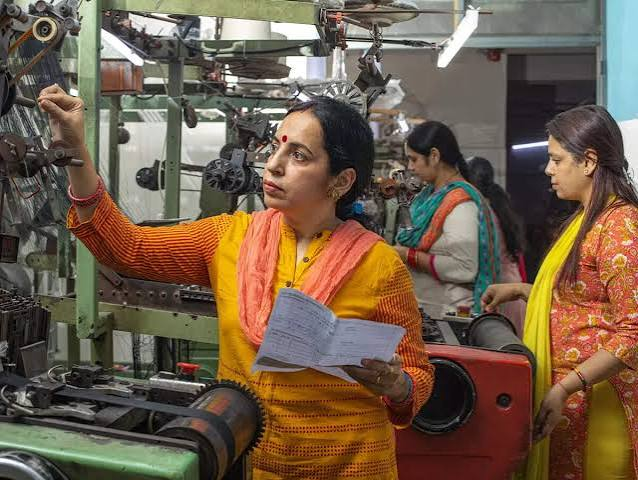
Growth of women in the manufacturing sector is helping the industry. Photo credit: ETHRWorld
Future Outlook
1. Growth prospects: 7-8% CAGR over the next 5 years.
2. Increasing foreign investment and expanding private sector investment.
3. Focus on high-tech manufacturing (aerospace, defense, electronics, etc.)

Chandrapal Singh lives in Mumbai, India, holds a B.A. from Mumbai University, and has successfully run his ad and marketing agency for 15 years. He is very much into writing literature and other literary works and will soon publish his poetry book. Contact him via his email: chandrapal@timesmedia.co.in.