



By Heartmenders Magazine –
The Democratic Socialist Republic of Sri Lanka is an island country in South Asia, near South-east India. The elephant occupies a prominent place in the lives of Sri Lankans, from primordial times to the present day. For many centuries, Sri Lankans have been domesticating elephants.
Sri Lankan farmlands are very rough terrain; the people knew that, to survive, they needed tougher labor to subdue the topography, cultivate their food, and move heavy logs and other materials to build shelters and other structures for themselves. No other wild beasts living in their forests could have such enormous strength to achieve such daunting tasks except the elephant.
Not only are elephants needed for labor, but they also hold a quasi-sacred status in Sri Lanka. Inclusively, it holds a symbolic, cultural, religious, and economic importance. It’s so significant that schoolchildren are taught how elephants are cared for from infancy.
Taming an animal, be it from the smallest mammal in the world, the bumblebee bat, to the most gigantic forest creature like the elephant, would not be an easy commission. Going inside the jungle to trap elephants and bringing them home to be domesticated was a very tough job. Accidents can lead to the loss of lives. But why would the Sri Lankans choose to live side by side with this huge beast in their villages and cities? Is taming the elephants worth the risk elephant catchers take?

Elephant Back Ride Sri Lanka – Sri Lanka Holidays from Getaway Sri Lanka
Now, let us consider the economic and cultural benefits of elephants to people. Tourists spend money to visit the country, explore its national parks, and watch elephants in the wild. Many Sri Lankan elephants possess no tusks. And thanks to that, it has helped to keep away poachers who shamelessly kill them for their tusks. But the few elephants with tusks are highly valued by people for their role in festivities and cultural significance.
When elephants are considered the most valuable wildlife in this South Asian country, it’s not an exaggeration. It indeed played a major role in the people’s survival. It played a vital role in grassroots economic development. They tapped the elephant’s strength for labor. Using their specialized traditional technology, they capture, tame, and train elephants to help them work.

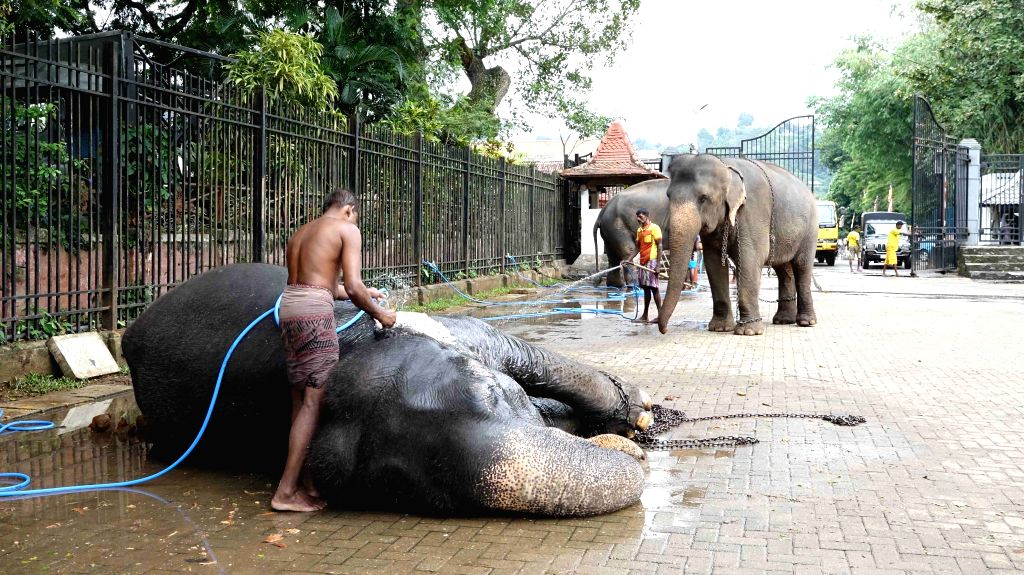
SRI LANKA-KANDY-ELEPHANTS-BATH – Prokerala, Source
In Buddhism, the major religion of the people, elephants are used in religious ceremonies and rituals. Elephant keepers and owners are valued on religious grounds when they participate with their elephants in these religious functions.
In ancient times, elephants were only owned by kings. And no one could capture or domesticate them without their permission. But before independence in 1948, the colonial masters introduced the shooting of elephants as a sport, drastically depleting the number of the animals. After independence, to prevent the animal from becoming extinct, the government outright banned the capture of elephants in the wild.
Orphaned and injured wild elephants can be captured to ensure their availability for continued use in traditional weddings, processions, and the ordination of Buddhist priests in Sri Lanka.
Those who own domesticated elephants are paid when their elephants are used for labor. Labor such as timbering, agriculture, construction, roadwork, transportation, and work elephants, which are used in training new work elephants. They are also paid when their elephants are used in recreation and ceremonies. Auctioning a domesticated elephant had fetched thousands of U.S. dollars for the owners.
The outlined advantages of working elephants over machinery are that elephants require no fuel. Thus, the hazards of engine emissions to humans and the environment are eliminated. Also, elephants can access and work in rugged terrains where machines cannot go. Elephants are cheap to maintain and do not need to be imported, unlike machines imported from other countries. Again, elephants do not degrade the environment with their tracks; they provide traction and lift for other animals.
Sri Lankans never use elephant meat or hide. They are neither eaten nor skinned for their hides, which are used to make various leather products. But at one time, and perhaps still ongoing, conflicts between the people and the elephants existed. People had invaded elephants’ wild habitats, turning them into farmland. The government had designated certain areas as Agricultural development areas, and some of these were the original habitats of wild elephants. Thus, it became inevitable that elephants would invade their farms for food. And a lot of these innocent beasts had been shot by the farmers in defense of their crops and homes.
One such conflict between the villagers and the wild elephants arose during the Mahaweli Development Program, implemented by the Sri Lankan government, to convert the Mahaweli dry zone into fertile farmland by irrigating it with water from the Mahaweli River. This dry zone had been the home of a large population of wild elephants. But families were resettled there to grow rice.
Sri Lankans call elephant capturers and trainers Pannikans. In ancient times, the work of training and domesticating elephants was revered as one of the most valuable occupations in Sri Lanka. Today, the job is nearly extinct due to a government ban on elephant capture.
The objective of taming captured elephants is to make them obey their human handlers and give up their wild ways. The near-extinction of this once-upon-a-time profession is a reminder of how things change and how jobs that may be relevant today can become extinct in the future. Sri Lankan elephants were also exported.

JustWravel – Sri Lankan elephants
New Year festivities in Sri Lanka feature elephants in various ceremonies. Elephants were featured in various sports and competitive combats. Elephant fights were called Gaja Keliya and regarded historically as a form of Sinhala sport. This sport used to be as popular as cricket and football.
As domesticated elephants continue to play their indispensable role in the cultural and perhaps economic lives of Sri Lankans, every effort should be made to see the survival and the well-being of other wild elephants in Sri Lanka.
Thinking about visiting Asia, Africa, or the United States? Heartmenders Magazine can offer you help. We can provide you with free information if you email us your concern at heartmendersfoundation@yahoo.com