



By Heartmenders Magazine Editorial Team
The Mursi tribe lives in the Omo Valley, in one of the most isolated regions of Ethiopia. This group of people is unique. Among the indigenous peoples of Africa who still live as their forefathers did, the Mursi are at the top of the list of the very few tribes.
The location of their home made it difficult to access, which is why they appeared isolated from the rest of the people in Ethiopia.
They are at the border with South Sudan, surrounded by the Omo River and its many tributaries, known as the Mago, and by mountains.
They speak a Nilo-Saharan language similar to Suri, spoken by one of their neighbors.

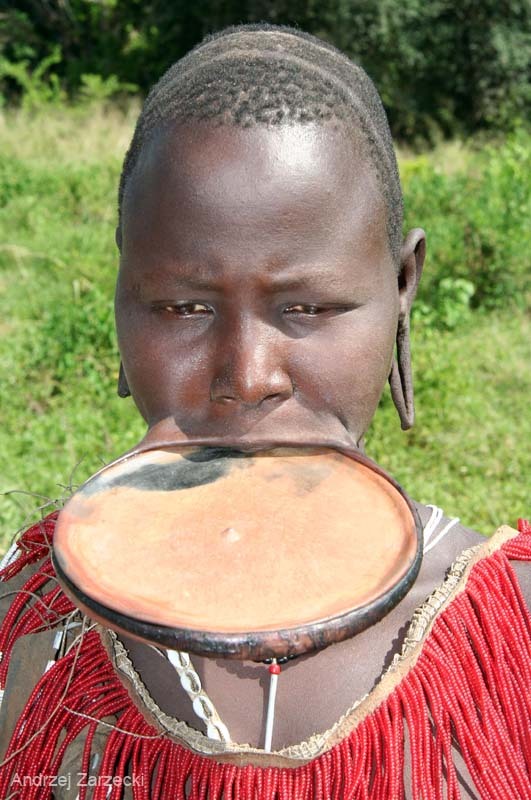
A Mursi woman wearing the lip plate. The larger the plate, the more the Mursi woman is valued during marriage. Photo source: Timeless Ethiopia
They are surrounded by the people of Aari, the Banna, the Bodi, the Kara, the Kwegu, and the Nyangatom, including the Suri.
Cattle rearing and farming are what they’ve mostly depended on for survival in the 21st century; that’s why they were severely affected economically by the severe drought that ravaged Ethiopia in recent years.
The Mursi tribesman or woman can easily be spotted from the rest of the people because of their peculiar way of dressing and local adornment unique to them.
The women are seen wearing various local headdresses. And around 15-16 years old, they would also wear clay or wooden plates of different sizes in their largely pierced lower lips or earlobes.
After the piercing, they keep stretching and stretching the holes, especially those of the lips, to enable them to carry these different sizes of plates in their mouths.
The custom of plate wearing is said to be connected with educational and disciplinary rites. But in other reports, it was said to be connected with traditional marriage rites.

The women would start stretching their lips, six months before marriage, to enable them to carry in their mouths the biggest size of these lip plates they could afford, as the size at this time would indicate the number of cattle, “the husband will have to pay for her dowry,” according to www.tribu.co.uk.
While barter trade has historically been associated with ancient ways of buying, selling, and exchanging goods, the Mursi still adhere to this practice as a means of transactions and sharing goods amongst the people.
Www.greenethiopiatours.com reported, “According to the 2007 national census, there are 7500 Mursi, 448 of whom live in urban areas; of the total number, 92.25% live in the Southern Nations Nationalities and People’s region (SSNPR).”
The Ethiopian government groups the Mursi people with the Me’en and the Suri under the name Surma.

A Mursi girl. Photo source: Timeless Ethiopia
This article was first published with a different title in the print format of our 4th Magazine Edition and is now re-edited and republished by the Heartmenders Magazine editorial team.