



By Okechukwu Okugo | Founding Editor
Today’s world has many troubles. Many people are now in despair and without hope. Don’t tell me you are one of them? Don’t accept it, at least not after you have finished reading this article. Though granted, many now face such terrible conditions that they feel as if they are at the end of the world. But examples of men who faced tough times with cheer should inspire hope in the wounded. They show that it is not what one goes through that matters, but one’s attitude toward it. The story of Franklin D. Roosevelt, the 32nd U.S. President, is powerful. It can inspire hope and a desire to achieve the unthinkable, no matter the situation. The brave and determined can achieve beyond expectations. Those who defied their limits and did the unthinkable proved it. Those who set their own limits, not others, always win in tough times. FDR was America’s first president with a major physical disability. He was stricken by Polio at the age of 39 in 1921. While on vacation at their cottage on Campobello Island, Canada, he fell ill on his yacht. He fell overboard into the Bay of Fundy. His strength faded, causing total paralysis and great distress within three days. On August 25, 1921, Dr. Robert Lovett diagnosed him with Polio. At that time, it had no known cure. A crippling disease wanted to end the dreams of a once “never-resting” man and politician. He cut off from public life and entered full rehabilitation at his Hyde Park home in New York.

President Roosevelt’s wheelchair. Photo credit: NY.GOV
For years, he focused on recovering from paralysis. Knowing his leg could support his weight in water, he swam. It became his main exercise. He engaged in rigorous exercise. By winter 1921, his arms were strong. His nervous system functioned as expected. His stomach and lower back grew stronger. By 1922, he was fitted with braces that ran from the hip downwards. And by the spring of that year, he was able to stand with help. From 1924, he started visiting Warm Springs, Georgia, to use the facility. Warm Springs’ water comes from Pine Mountain. It is pure and rich in minerals. Because wheelchairs were bulky at the time, he designed a fast, sleek one for himself. FDR faced the bias and ignorance of the 1920’s with insurmountable courage—a time when society frowned upon disability. Families put disabled members into asylums and banished them. Then, society considered the disabled unfit for work. They were often removed from it. During this time, FDR suffered. But he did not let the illness or the societal stigma darken his bright personality. Not only that, but he also rose and pursued his political dreams. With the full support of his wife, Eleanor, and his friend, Louis Howe, he ran for governor of New York in 1928 and won. Not only that, he won. He held the governorship for two terms. Then, he ran for President in the 1932 election. He never let his opponent’s insults distract or discourage him. Despite tough times, FDR’s kindness and charm never wavered. The American public loved him for it. He won and became President. In 1926, Warm Springs in Georgia, which he often visited, faced financial troubles. He wouldn’t allow the facility to close. He bought it for $200,000. Then, he turned it into a rehab center for polio patients like himself. In 1927, the American Orthopedic Association made the Warm Springs Foundation a permanent hydro-therapeutic center. His Warm Springs became the prime place for polio patients to receive therapy. In 1938, he founded the Warm Springs and the Infantile Paralysis foundations. He started their annual fundraisers. All proceeds went to the Foundations. The National Foundation for Infantile Paralysis funded the Salk vaccine research. It became a cure for polio, though he had died before its discovery. FDR was one of the greatest presidents in American history. His disability never interfered with his role as president. He mentored thousands of Americans, many of them children as young as six. The disease afflicted them. They flooded him with letters. They asked him to write back to encourage them to face their challenges. He replied to those afflicted children, encouraging them. His words and actions gave many much courage and made them live with the hope of overcoming their own adversity. His life was an inspiration to thousands and millions of Americans. FDR was an extraordinary man with an extraordinary heart. He was hit at the time he was aiming for the peak of his career with a disease that has no cure. When society never helped victims, yet he beat the disease, reached the pinnacle, and never allowed the pains to drown his cheerful personality, or listen to naysayers who tried to stop him. The disease, which had no cure that would have ended his career and life, he helped find the cure. Imagine Roosevelt had given up and given in.
How do you view adversity in life? The end of the road? Do you know that whatever you passed through may have been the oil to empower you to help many in a similar condition? Do you shrink back and give up, or do you push, win, and come out to help others with your experience? If you face something and win, don’t withdraw into your shell and keep quiet. Come out and help as many people as you can; a life you encourage is something.
How do you view adversity in life? The end of the road? Do you know that whatever you passed through may have been the oil to empower you to help many in a similar condition? Do you shrink back and give up, or do you push, win, and come out to help others with your experience? If you face something and win, don’t withdraw into your shell and keep quiet. Come out and help as many people as you can; a life you encourage is something. – Okechukwu Okugo

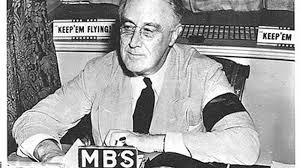
FDR – SOURCE, FOX 13 SEATTLE
Eleanor, FDR’s wife, called his disability a “blessing in disguise.”
One can always view life’s hardest battles this way. But one must find “a way of looking at the big picture instead of worrying over the small stuff,” as Amy Berish wrote.
Amy, a 2014 Library Science grad from Southern Connecticut State, wrote an article that provided the information about FDR I used in preparing this column.
She went on to say in the article, “FDR’s illness threw him into a category frowned upon by most American population. The way he viewed himself as a person, father and politician despite his limitations helped others change the way they viewed others crippled by disease or disability. Disability or not, FDR became a symbol of strength and perseverance to Americans.”
And this goes a long way toward showing that one’s attitude in the face of adversity can significantly change one’s world. Trying harder, thinking outside the box, and hanging on with courage are ways to rise above all the limits imposed by your circumstances.
Trying harder, thinking outside the box, and hanging on with courage are ways to rise above all the limits imposed by your circumstances. – Okechukwu Okugo
Eleanor Roosevelt presented this fact clearly in her book You Learn by Living. It stated:
“You gain strength, courage, and confidence by every experience in which you really stop to look fear in the face. You are able to say to yourself, ‘I have lived this horror. I can take the next thing that comes along.’…You must do the thing you think you cannot do.”

President Roosevelt’s car, with the construction that enabled him to drive without legs. Photo credit: gpb.org
Let me give you, the reader, a practical way to apply what I am writing here: For example, suppose your condition makes you believe that flying is impossible. Many people around you are likely assuring you that you cannot by seeing your “limiting” condition. But don’t stop at that. You may need to learn the actions pilots take to fly an airplane. Then, start doing the same thing with whatever you have. You might surprise yourself by succeeding and surpassing all expectations. Another example: If someone has told you that you have 6 months to live, don’t worry about dying. Instead, surround yourself with good cheer. Live each day to the full, doing what you love. Take it one day at a time. You may live far beyond the time that someone told you you’d die. If you die by then, you’ll die fulfilled. Your cheerful outlook will have lifted your loved ones. It will give them more courage to fight with you. As well as helping create a satisfying memory of you.
Your experience in tough times might be the one fire that brings out your hidden best. It may also teach you a vital lesson for success in life.
A fact buttressed by the words of FDR’s wife in her autobiography,
“Franklin’s illness proved a blessing in disguise for it gave him strength and courage he had not had before. He had to think out the fundamentals of living and learn the greatest of all lessons–infinite patience and never-ending persistence.”
Instead of worrying, during the days of challenges, pay attention. Learn the vital lessons of life. No condition can stop you if you do not stop yourself.
Instead of worrying, during the days of challenges, pay attention. Learn the vital lessons of life. No condition can stop you if you do not stop yourself. – Okechukwu Okugo
This article, previously published on Heartmenders Magazine website, has been updated and republished with an enhanced new title.
2 responses to “The President Who Led from a Wheelchair: The Inspiring Story of America’s Big-Hearted Leader”
This is beautiful, a masterpiece of thought put on the script. This is so informative, so inspiring especially those going through any forms of challenges in life. And another good example of how ones dreams, creativity, imagination manifest. Roosevelt did not wait for manufactures to design a better wheelchair suitable for his condition. He went ahead with his thoughts designed and created what was suitable for his condition at that time.
Thank you.
You are welcome. Your response is insightful and powerful to make people understand no one should wait for others when they can innovate to help uplift themselves in any difficult situation. Keep reading, writing, and responding.